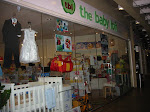
Are you going to be flying with your baby? One of the biggest travel concern from parents is the safety of their child. The Baby B'Air Flight Vest is one way to put your child in a safer environment for the flight. In U.S., Baby B'Air is currently meeting with the Federal Aviation Administration (FAA) to expand the use of the vest for the entire flight, including taxi and takeoff. You can find out more about the flight vest in this video.
http://www.youtube.com/watch?v=S_SEAq1pQVs
The Flight Vest is available in our Desa Parkcity boutique in KL, or online in our Malaysia or U.S. store.
Showing posts with label Reading corner - Parenting. Show all posts
Showing posts with label Reading corner - Parenting. Show all posts
Tuesday, August 12, 2008


Friday, May 9, 2008
Celebrity moms talk about parenting...
A few awesome snippets of parenting from Kate Hudson, Sigourney Weaver, Helen Hunt, Thandie Newton, Salma Hayek...in many ways celebrities have the same joys and worries just like us...
"I'm very impatient. I like to get things done. I move fast. Patience has been something he's teaching me" - Kate Hudson
"You can't believe you have this without a license, without any training. You learn as you go" - Sigourney Weaver
"they'll do what you do and not what you say" - Helen Hunt
"I remember the first time Ripley saw her shadow. My god. It was like shadows had just been invented." - Thandie Newton
"I relearned how to love everything around me, too." - Salma Hayek
Read the full story at:
http://www.usatoday.com/printedition/life/20080508/d_celebmoms08.art.htm
Tuesday, April 8, 2008
Are you ready for kids?
FOLLOW THESE 14 SIMPLE TESTS BEFORE YOU DECIDE TO HAVE CHILDREN
Test 1 - Preparation
Women : To prepare for pregnancy:-
1. Put on a dressing gown and stick a beanbag down the front.
2. Leave it there.
3. After 9 months remove 5% of the beans.
Men: To prepare for children:-
1. Go to a local chemist, tip the contents of your wallet onto the counter and tell the pharmacist to help himself
2. Go to the supermarket. Arrange to have your salary paid directly to their head office.
3. Go home. Pick up the newspaper and read it for the last time
Test 2 - Knowledge
1. Find a couple who are already parents and berate them about their methods of discipline, lack of patience, appallingly low tolerance levels and how they have allowed their children to run wild.
2. Suggest ways in which they might improve their child's sleeping habits, toilet training, table manners and overall behaviour.
Enjoy it. It will be the last time in your life that you will have all the answers.
Test 3 - Nights
To discover how the nights will feel:
1. Walk around the living room from 5pm to 10pm carrying a wet bag weighing approximately 4-6kg, with a radio turned to static (or some other obnoxious sound) playing loudly.
2. At 10pm, put the bag down, set the alarm for midnight and go to sleep.
3. Get up at 11pm and walk the bag around the living room until 1am.
4. Set the alarm for 3am.
5. As you can't get back to sleep, get up at 2am and make a cup of tea.
6. Go to bed at 2.45am.
7. Get up again at 3am when the alarm goes off.
8. Sing songs in the dark until 4am.
9. Put the alarm on for 5am. Get up when it goes off.
10. Make breakfast.
Keep this up for 5 years. LOOK CHEERFUL.
Test 4 - Dressing Small Children
1. Buy a live octopus and a string bag.
2. Attempt to put the octopus into the string bag so that no arms hang out.
Time Allowed: 5 minutes.
Test 5 - Cars
1. Forget the BMW. Buy a practical 5-door wagon.
2. Buy a chocolate ice cream cone and put it in the glovebox. Leave it there.
3. Get a coin. Insert it into the CD player.
4. Take a box of chocolate biscuits; mash them into the back seat.
5. Run a garden rake along both sides of the car.
Test 6 - Going For a Walk
1. Wait
2. Go out the front door
3. Come back in again
4. Go out
5. Come back in again
6. Go out again
7. Walk down the front path
8. Walk back up it
9. Walk down it again
10. Walk very slowly down the road for five minutes.
11. Stop, inspect minutely and ask at least 6 questions about every piece of used chewing gum, dirty tissue and dead insect along the way.
12. Retrace your steps
13. Scream that you have had as much as you can stand until the neighbours come out and stare at you.
14. Give up and go back into the house.
You are now just about ready to try taking a small child for a walk.
Test 7
Repeat everything you say at least 5 times.
Test 8 - Grocery Shopping
1. Go to the local supermarket. Take with you the nearest thing you can find to a pre-school child - a fully grown goat is excellent. If you intend to have more than one child, take more than one goat.
2. Buy your weekly groceries without letting the goat(s) out of your sight.
3. Pay for everything the goat eats or destroys.
Until you can easily accomplish this, do not even contemplate having children.
Test 9 - Feeding a 1 year-old
1. Hollow out a melon
2. Make a small hole in the side
3. Suspend the melon from the ceiling and swing it side to side
4. Now get a bowl of soggy cornflakes and attempt to spoon them into the swaying melon while pretending to be an aeroplane.
5. Continue until half the cornflakes are gone.
6. Tip the rest into your lap, making sure that a lot of it falls on the floor.
Test 10 - TV
1. Learn the names of every character from the Wiggles, Barney, Teletubbies and Disney.
2. Watch nothing else on television for at least 5 years.
Test 11 - Mess
Can you stand the mess children make? To find out:
1. Smear peanut butter onto the sofa and jam onto the curtains
2. Hide a fish behind the stereo and leave it there all summer.
3. Stick your fingers in the flowerbeds and then rub them on clean walls. Cover the stains with crayon. How does that look?
Test 12 - Long Trips with Toddlers
1. Make a recording of someone shouting 'Mummy' repeatedly.
Important Notes: No more than a 4 second delay between each Mummy.
Include occasional crescendo to the level of a supersonic jet.
2. Play this tape in your car, everywhere you go for the next 4 years
You are now ready to take a long trip with a toddler.
Test 13 - Conversations
1. Start talking to an adult of your choice.
2. Have someone else continually tug on your shirt hem or shirt sleeve while playing the Mummy tape listed above.
You are now ready to have a conversation with an adult while there is a child in the room.
Test 14 - Getting ready for work
1. Pick a day on which you have an important meeting.
2. Put on your finest work attire.
3. Take a cup of cream and put 1 cup of lemon juice in it
4. Stir
5. Dump half of it on your nice silk shirt
6. Saturate a towel with the other half of the mixture
7. Attempt to clean your shirt with the same saturated towel
8. Do not change (you have no time).
9. Go directly to work
You are now ready to have children. ENJOY!!
Sunday, March 16, 2008
Foods known to cause allergies in babies
This list of baby foods to avoid contains foods known to provoke allergic reactions or digestive problems in babies. This doesn't mean that all these foods will make your child unwell. But if you're worried that your baby is very sensitive - maybe because you have a food allergy yourself - then it is definitely worth avoiding them for the first year, at least.
Baby Foods To Avoid - Foods Likely To Cause An Allergic Reaction Or Digestive Problem
Eggs (especially the whites)
Cow's milk
Peanuts or peanut butter
Shellfish - lobster, prawns, crab and shrimp
Wheat
Chocolate
Soy
Pork
Gluten - contained in wheat, oats and barley
Fish - particularly plaice, tuna, salmon, mackerel and sardines
Berries - especially strawberries
Cinnamon
Citrus fruits - orange, grapefruit, lemon, lime and tangerine
Sesame seeds/sesame oil
Coconut
Corn
Tomatoes
Yeast
Baby Foods To Avoid - Foods That Present A Choking Hazard
Nuts
Large chunks of fruit or vegetables, raw or cooked
Large chunks of meat
Whole grapes or cherry tomatoes - always cut into quarters
Popcorn
Seeds
Raisins - wait until your baby has teeth and is chewing well
Baby Foods To Avoid - Honey
NEVER give honey to a baby under one year of age.
Honey can contain botulism spores. In babies, the spores can grow and produce life-threatening toxins.
Do not use honey to sweeten yogurt, or in any other form, before your baby's first birthday.
Credit: Homemade Baby Food Recipes
Saturday, March 8, 2008
Honey seems to calm children's coughs in 1-night study
By CARLA K. JOHNSON
CHICAGO (AP) -- A teaspoon of honey before bed seems to calm children's coughs and help them sleep better, according to a new study that relied on parents' reports of their children's symptoms.
The folk remedy did better than cough medicine or no treatment in a three-way comparison. Honey may work by coating and soothing an irritated throat, the study authors said.
"Many families are going to relate to these findings and say that grandma was right," said lead author Dr. Ian Paul of Pennsylvania State University's College of Medicine.
The research appears in December's Archives of Pediatrics and Adolescent Medicine
U.S. health advisers have recently warned that over-the-counter cough and cold medicines should not be used in children younger than 6, and manufacturers are taking some products for babies off the market.
Three pediatricians who read the study said they would tell parents seeking alternative remedies to try honey. They noted that honey should not be given to children under age 1 because of a rare but serious risk of botulism.
For the research, researchers recruited 105 children with upper respiratory infections from a clinic in Pennsylvania. Parents were given a paper bag with a dosing device inside. Some were empty. Some contained an age-appropriate dose of honey-flavored cough medicine containing dextromethorphan. And some contained a similar dose of honey.
The parents were asked about their children's sleep and cough symptoms, once before the bedtime treatment and once after. They rated the symptoms on a seven-point scale.
All of the children got better, but honey consistently scored best in parents' rating of their children's cough symptoms.
"Give them a little time and they'll get better," said Pat Jackson Allen, a professor at Yale University School of Nursing.
The study was funded by a grant from the National Honey Board, an industry-funded agency of the U.S. Department of Agriculture. The agency had no influence over the study design, data or results, Paul said.
Friday, February 22, 2008
Nature tops nurture in childhood obesity
LONDON, Feb 7 (Reuters) - Diet and lifestyle play a far smaller role than genetic factors in determining whether a child becomes overweight, according to a British study of twins published on Thursday.
Researchers looking at more than 5,000 pairs of twins wrote in the American Journal of Clinical Nutrition that genes account for about three-quarters of the differences in a child's waistline and weight.
"Contrary to the widespread assumption that family environment is the key factor in determining weight gain, we found this was not the case," said Jane Wardle, director of Cancer Research UK's Health Behaviour Centre, who led the study.
Previous studies have pointed to environmental factors as the main cause of obesity, a major problem worldwide that increases the risk later in life of type-2 diabetes, cancer and heart problems.
The World Health Organisation classifies around 400 million people worldwide as obese, including 200 million children under the age of five.
The British team looked at pairs of identical twins who share all their genes and compared their measurements with those of non-identical twins who share only half their genes.
A statistical analysis found that the differences in the children's body mass index and waist circumference were 77 percent attributable to genes and 23 percent due to the environment in which the children were growing up.
BMI is calculated by dividing weight by the square of height.
"These results do not mean that a child with a high complement of 'susceptibility genes' will inevitably become overweight, but that their genetic endowment gives them a stronger predisposition," the researchers said.
The results suggest that parents whose children are at the greatest genetic risk may need support to make sure they provide a healthy environment, the researchers said.
"This study shows that it is wrong to place all the blame for a child's excessive weight gain on the parents," the researchers said.
(Reporting by Michael Kahn, Editing by Will Dunham and Tim Pearce)
Monday, December 24, 2007
Christmas Baby Recipes
Entree: One Pot Christmas Dinner - A simple and quick recipe making use of the Christmas foods. 8 months+
Ingredients Needed:
1 cup of cubed Roast Beef, Mutton (Lamb) or Turkey - uncooked
(using cooked is fine as well)
1/2 cup peeled and cubed winter squash
1/2 cup peeled and cubed white potato
1/2 cup peeled and cubed sweet potato
1/2 cup peas or green beans
1 small handful of fresh or frozen cranberries
Directions:
Combine all ingredients in a medium sized sauce pan
Add 2 cups of water
Bring to a gentle boil and then turn heat to low
Simmer on low for 20 minutes or until turkey is no longer pink and veggies may be easily pierced with a fork.
Transfer cooked One Pot Christmas Dinner to a large mixing bowl and mash or chop as needed. Process in a Blender or Food Processor if needed for babies who do not like lumps and textures.
This will freeze nicely if pureed
On Christmas Day, you may also take a piece of cooked roast beef, mutton or turkey and combine it with the veggies being served to create Baby's Christmas Dinner.
Dessert: Baby's Sweet Potato Apple Pie 6 months+
Mix in some sweet potatoes and applesauce with oatmeal or rice cereal. Mix in yogurt for babies over 8 months.
Wednesday, December 19, 2007
TV can raise blood pressure in obese children
By Anne Harding
NEW YORK (Reuters Health) - Obese children who watch a lot of television are more likely to have high blood pressure than heavy children who don't spend as much time in front of the tube, the results of a new study shows.
Increased psychological stress and junk food eaten while watching TV could be factors in the relationship, principal investigator Dr. Jeffrey B. Schwimmer of the University of California, San Diego, told Reuters Health.
Obese children who watched 2 to 4 hours of TV each day were 2.5 times more likely than their peers who watched less TV to have high blood pressure, he and his colleagues found, while kids who watched more than 4 hours daily had more than triple the risk of having high blood pressure.
TV watching time clearly influences obesity and high blood pressure is a known consequence of obesity, Schwimmer and his team point out in the American Journal of Preventive Medicine.
To investigate this relationship, they evaluated 546 children between 4 and 17 years old who were seeking treatment for obesity. Forty-three percent had high blood pressure.
Most of the study participants with high blood pressure watched 2 hours or more of television. Time spent watching television was also associated with the severity of obesity, the researchers found.
Kids who watch more TV may also be eating more fatty, salty foods, which could directly contribute to high blood pressure, Schwimmer and his colleagues note.
Studies have shown that children who watch more TV experience more perceived psychological stress, Schwimmer noted, and evidence is mounting that stress can alter how the brain communicates with other organs, affecting blood pressure and body fat accumulation and distribution.
The findings underscore the importance of limiting children's TV viewing to less than 2 hours a day, as recommended by the American Academy of Pediatrics, he said, and that this may be particularly important for overweight and obese children.
Blood pressure is often not measured in children, and if it is measured, "it's often not done correctly," Schwimmer added. "I would encourage parents of children to raise the issue of blood pressure with their child's doctor."
SOURCE: American Journal of Preventive Medicine, December 2007.
Friday, December 7, 2007
Honey eases nighttime cough
By Anne Harding
NEW YORK (Reuters Health) - A spoonful of honey can quiet children's nighttime cough and help them -- and their parents -- sleep better, a new study shows.
When compared to the cough syrup ingredient dextromethorphan or no treatment, honey came out on top.
"The results were so strong that we were able to say clearly that honey was better than no treatment and dextromethorphan was not," Dr. Ian M. Paul of Pennsylvania State University in Hershey, one of the study's authors, told Reuters Health.
There is currently no proven effective treatment for cough due to an upper respiratory infection like the common cold. While dextromethorphan is widely used, there is no evidence that it works, and it carries risks.
Honey is used around the world as a folk remedy for cough, and might provide a safe, effective alternative to cough medicine, Paul and his colleagues note in the Archives of Pediatrics and Adolescent Medicine.
To investigate, they compared buckwheat honey, a honey-flavored dextromethorphan preparation, and no treatment in 105 children who had sought treatment for nighttime coughs due to colds. Parents were surveyed on the day of the doctor's visit and on the next day, after those in the treatment groups had given their kids honey or dextromethorphan at bedtime.
Among the three groups, children given honey had the greatest reduction in cough frequency and severity, and the most improved sleep, as did their parents.
There are several explanations for why honey might ease cough, Paul and his team note; its sweet, syrupy quality may be soothing to the throat, while its high antioxidant content could also be a factor. Honey also has antimicrobial effects.
Honey isn't recommended for infants younger than one year old, because of the rare but serious risk it might cause a type of food poisoning known as botulism, Paul said in an interview. For older kids, however, it is generally safe. He and his colleagues used a dosage identical to that recommended for cough syrups: half a teaspoon for two- to five-year-olds, a teaspoon for six- to eleven-year-olds, and two teaspoons for children twelve and older.
"The study offers an interesting alternative to traditional over-the-counter remedies for cough in children," Dr. Michael Warren of Vanderbilt University in Nashville, Tennessee and colleagues conclude in a commentary accompanying the study.
SOURCE: Archives of Pediatrics and Adolescent Medicine, December 2007
Sunday, November 25, 2007
Win the Seat Battle With Toddlers
By Beth Whitehouse(c) 2007, Newsday
MELVILLE, N.Y. -- Sometimes, when I try to put my toddler into his car seat or stroller, he arches his back and fights me because he doesn't want to get in. How do I get him to cooperate without causing a public scene?
Forget reasoning with him, says pediatrician and University of California, Los Angeles Assistant Professor Harvey Karp. Your little guy is -- and these are Karp's words -- "a Neanderthal" who cares not one iota about highway safety statistics or your need to make it to an appointment on time.
"Toddlers are not so much little adults as they are little cavemen. They're uncivilized. They're primitive," says Karp, creator of the DVD and book "The Happiest Toddler on the Block: The New Way to Stop the Daily Battle of Wills and Raise a Secure and Well-Behaved One- to Four-Year-Old."
Therefore, you have to communicate in a way they understand. Here's what Karp would do: Even though you might feel like an idiot, get down to your child's level and imitate his words, actions and feelings. Say, "No, no, you don't want to get in the car seat, do you?"
"The goal is not to make them laugh, not to be funny or clownish, but to empathize with them," he says.
He predicts the tantrum will stop in 50 percent of the cases. Then, you can negotiate with your child. Yes, he does advocate a little negotiation in this case. "You're not a general and they're a soldier," he says. "When you're out of the house, they've got you over the barrel."
So, he recommends making a little agreement once they quiet down. Say, "OK, we'll run to the wall and back together three times, and then you have to get in the car seat."
Then, it's time for some prevention homework. You can reduce future battles by making the car seat or stroller a more fun place to be, Karp says. Take the car seat or stroller into the house, and let the child play in it. Read him stories while he's sitting in it.
Select a special treat -- a cookie or a song or a story -- that he only gets to eat or hear in the car seat or stroller.
Then, next time you're out and he doesn't want to cooperate, you can entice him with the only-when-you're-in-the-car-seat treat. "In a pinch, you use all the tools in your tool chest," Karp says. "Use diplomacy as opposed to brute strength."
Distributed by the Los Angeles Times-Washington Post News Service
Wednesday, September 19, 2007
Kids smarter than apes -- sometimes, anyway
By Will Dunham
WASHINGTON, Sept 6 (Reuters) - It's official: Your toddler is smarter than a chimp, at least at some things.
A unique study comparing the abilities of human toddlers to chimpanzees and orangutans found that 2-year-old children have social learning skills superior to the apes, researchers said on Thursday.
In one social learning test, a researcher showed the children and apes how to pop open a plastic tube to get food or a toy contained inside. The children observed and imitated the solution. Chimpanzees and orangutans, however, tried to smash open the tube or yank out the contents with their teeth.
European scientists gave a battery of cognitive tests lasting three to five hours separately to 105 2-year-old children, 106 chimpanzees and 32 orangutans over two weeks.
"Using these multiple tests allows us to pinpoint where are the similarities and where are the differences," researcher Josep Call of the Max Planck Institute for Evolutionary Anthropology in Leipzig, Germany told reporters.
The researchers believe their findings provide insight into the evolution of human cognition. People's brains are three times larger than those of the closest primate relatives. "This is the first time that anything like this has been done," added Max Planck Institute researcher Esther Herrmann. Chimpanzees and orangutans are among the great apes. Chimps are considered the closest genetic relatives to people, with orangutans a bit more distantly related.
The researchers found that the children were far more advanced than the chimps and orangutans in understanding nonverbal communications, copying another person's solution to a problem and understanding the intentions of others.
The apes were closer to the toddlers in some other tests like those measuring "physical cognitive skills" involving things like quantities and causality, the researchers found.
"Young human children who had been walking and talking for about one year, but who were still several years away from literacy and formal schooling, performed at basically an equivalent level to chimpanzees on tasks of physical cognition, but far outstripped both chimpanzees and orangutans on tasks of social cognition," they wrote in the journal Science.
"We may thus think of 2-year-old children's cognitive development in the physical domain as still basically equivalent to that of the common ancestor of humans and chimpanzees some 6 million years ago ... but their social cognition as already well down the species-specific path."
The apes performed the tests in animal sanctuaries in Africa and Indonesia. In another study in the same journal, other researchers said they showed that apes and monkeys do possess skills like figuring out the intentions of others. They studied cotton-top tamarins, rhesus macaques and chimpanzees.
REUTERS
Saturday, September 8, 2007
New study links food additives to hyperactivity in children
PARIS, Sept 6, 2007 (AFP) - A cocktail of artificial colours and the commonly-used preservative sodium benzoate are linked to hyperactivity in children, according to a ground-breaking study published on Thursday by The Lancet.
The implications are far-reaching, say the investigators, who suggest that by vetting their child's diet, parents have a simple tool to help them tackle hyperactive behaviour.
Researchers at Southampton University in southern England recruited 153 local three-year-olds and 144 children aged eight or nine and assigned them to either of two groups.
One group received an ordinary fruit juice and the other was given a drink identical in look and taste that contained common commercial additives. Both drinks were supplied to parents in identical, sealed anonymous bottles.
The "additives" group itself was split into two batches.
Some children were given "Mix A," a drink which contained artificial colourings typically found in a couple of 56-gramme (two-ounce) bags of sweets.
Others were given "Mix B" which had a higher level of colourings, equivalent (in the dosage for the eight-year-olds) to consuming the additives in four such bags of sweets.
Both mixes had the same amount of sodium benzoate.
Before the six-week trial began, the researchers asked parents and teachers to assess the child for overactive, impulsive and inattentive behaviour -- the hallmarks of hyperactivity.
A third yardstick was given by trained observers (in fact, psychology graduates), who sat discreetly in the classrooms and noted each child's behaviour according to an international set of measures.
For the first week of the trial, the children followed their typical diet.
After that, sweets and drinks with additives were withdrawn, and parents were asked to substitute with the trial drink instead.
The amount of the drink given to the child was in proportion to the amount of artificial colouring removed from their usual diet. The parents did not know whether the drink was Mix A, Mix B or the placebo.
Six weeks later, the children were assessed again for hyperactivity.
Mix A had a "significantly adverse" effect on the three-year-olds, although Mix B made no difference on this group. In the older children, both Mix A and Mix B had a strong effect.
"Overall, children who took the mix moved about 10 percent closer to the definition of being hyperactive," lead author Jim Stevenson, a professor of psychology at the university, told AFP.
"We now have clear evidence that mixtures of certain food colours and benzoate preservative can adversely influence the behaviour of children," said Stevenson.
"However, parents should not think that simply taking these additives out of food will prevent all hyperactive disorders. We know that many other influences are at work, but this at least is one a child can avoid."
The first caution about food additives and their impact on child health were made more than three decades ago, but evidence to give flesh to this warning has been scant or contested as unscientific.
In the past decade, hyperactivity has -- apparently -- ballooned into serious proportions in some countries, stirring controversy along the way.
US doctors commonly see hyperactivity as a medical condition (attention-deficit hyperactivity disorder, ADHD) and prescribe a potent drug, ritalin, to treat it.
Other experts speculate that hyperactivity has social causes such as home instability and poor education, and say use of powerful, mind-altering drugs is dangerous.
Friday, August 24, 2007
Children's fear of new foods may be in their genes
NEW YORK (Reuters Health) - UK researchers have provided an explanation for why some children hate to try new foods -- it's in the genes.
In a large study of twins, which included both identical and fraternal twin pairs, Dr. Lucy J. Cooke of University College London and her colleagues found that nearly 80 percent of children's tendency to avoid unfamiliar foods was inherited.
"Parents can be reassured that their child's reluctance to try new foods is not simply the result of poor parental feeding practices, but it is partly in the genes," Cooke and her team write. And, they add, repeatedly offering foods to children can make the foods more familiar, and eventually even liked.
Both humans and other animals show a reluctance to try new foods, known scientifically as "food neophobia." This avoidance may have had an evolutionary advantage in preventing exposure to potentially toxic foods, the researchers note in the American Journal of Clinical Nutrition. "In the modern environment where foods are generally safe to eat, neophobia appears principally to have an adverse effect on food choices, particularly on intake of foods and vegetables," they say.
To investigate the role of inheritance and upbringing in food neophobia, Cooke and her team surveyed the parents of 5,390 twin pairs 8 to 11 years old. Studying twins allows researchers to separate out the effects of genes and environment -- identical twins share 100 percent of their genes; fraternal twins share only about half; while both types of twins have the same childhood home environment if they are raised together.
Identical twins were much more likely to share tendencies toward food neophobia than fraternal twins were, the researchers found, with inheritance accounting for 78 percent of these tendencies. Shared environment had no effect, with the remaining 22 percent influenced by non-shared environmental factors.
Past studies of other behavioral similarities among family members have also found they are strongly influenced by genes and "surprisingly little" by the shared environment, Cooke and her colleagues note.
But these findings do not mean that parenting is unimportant in these behaviors. It's more likely, they add, that parents treat children differently, possibly because they sense differences in their needs, or that more genetically different children experience the same situation differently.
And inheritance doesn't have to determine this behavior, the researchers add. Laboratory research has shown that the more frequently children are offered a particular food, the more likely they are to come to like it.
"New foods can become familiar, and disliked foods become liked, with repeated presentation, although the process might be more laborious with a highly neophobic child," they write. "Guidance in effective feeding techniques and modification of other influential environmental factors may help to minimize the negative effects of neophobia on children's diets."
SOURCE: American Journal of Clinical Nutrition, August 2007.
Subscribe to:
Posts (Atom)