by Robin Elise Weiss, LCCE
Cloth diapering used to be the norm because - well, let's face it - that's what was available. As disposable diapers were invented and became popular, cloth diapering became something that not everyone did. Eventually it became thought of as more work for less benefit.
You've probably thought of many reasons why cloth diapering may not be for you. Perhaps the cost worries you. Maybe you're worried about messy diaper leaks from cloth diapers. Or maybe you simply don't know enough about cloth diapers to even formulate an opinion.
Cloth diapers have come a long way from rubber pants and diaper pins. Nowadays there are literally scores of choices. From simple all-in-ones (AIOs) to prefolds with wraps (no more diaper pins on most), there are tons of choices to keep your baby covered.
There are many benefits of cloth diapering. Here are some of the most often heard:
- Cost Savings
Cloth diapers can cost a bit of money to get started, but in the long run cloth diaper users are often ahead of the game in expenditures. If you figure that the average newborn goes through 8-12 diapers a day, 6-8 diapers a day for an older baby, that can really add up at the cost of about $0.29 per disposable diaper, and rising.
- Better for Baby
Cloth diaper users tend to have less issue with diaper rash, irritated bottoms and other common complaints from disposable diaper parents. Fewer chemicals touch the baby's bottom and the less likely they are to be sensitive. If you do have a sensitive baby, you can choose very natural, even organic, materials to use for the diapers that go on your baby.
- Better for the Environment
This one will be hotly debated for some time, but in general it is established that cloth diapers don't take up room in landfills and take hundreds of years to break down. The reduce, reuse and recycle concept means less trash for the environment.
- Less Time in Diapers
Many parents will tell you that they spent less time trying to potty train or educate their child about elimination communication (EC) when they used cloth diapers.
- Adorable!
Okay, it's also important to look at cloth diapering as a fashion statement. Cloth diapers are cute! They come in fashion colors and prints. Have fun with it!
About the author:
Robin Elise Weiss, BA, ICCE-CPE, CLC, CD(DONA), LCCE, FACCE is a childbirth and postpartum educator, certified doula, doula trainer, lactation counselor, and proud mother of seven beautiful children.
Copyright: about.com
Monday, March 17, 2008


Sunday, March 16, 2008
Foods known to cause allergies in babies
This list of baby foods to avoid contains foods known to provoke allergic reactions or digestive problems in babies. This doesn't mean that all these foods will make your child unwell. But if you're worried that your baby is very sensitive - maybe because you have a food allergy yourself - then it is definitely worth avoiding them for the first year, at least.
Baby Foods To Avoid - Foods Likely To Cause An Allergic Reaction Or Digestive Problem
Eggs (especially the whites)
Cow's milk
Peanuts or peanut butter
Shellfish - lobster, prawns, crab and shrimp
Wheat
Chocolate
Soy
Pork
Gluten - contained in wheat, oats and barley
Fish - particularly plaice, tuna, salmon, mackerel and sardines
Berries - especially strawberries
Cinnamon
Citrus fruits - orange, grapefruit, lemon, lime and tangerine
Sesame seeds/sesame oil
Coconut
Corn
Tomatoes
Yeast
Baby Foods To Avoid - Foods That Present A Choking Hazard
Nuts
Large chunks of fruit or vegetables, raw or cooked
Large chunks of meat
Whole grapes or cherry tomatoes - always cut into quarters
Popcorn
Seeds
Raisins - wait until your baby has teeth and is chewing well
Baby Foods To Avoid - Honey
NEVER give honey to a baby under one year of age.
Honey can contain botulism spores. In babies, the spores can grow and produce life-threatening toxins.
Do not use honey to sweeten yogurt, or in any other form, before your baby's first birthday.
Credit: Homemade Baby Food Recipes
Baby Foods To Avoid - Foods Likely To Cause An Allergic Reaction Or Digestive Problem
Eggs (especially the whites)
Cow's milk
Peanuts or peanut butter
Shellfish - lobster, prawns, crab and shrimp
Wheat
Chocolate
Soy
Pork
Gluten - contained in wheat, oats and barley
Fish - particularly plaice, tuna, salmon, mackerel and sardines
Berries - especially strawberries
Cinnamon
Citrus fruits - orange, grapefruit, lemon, lime and tangerine
Sesame seeds/sesame oil
Coconut
Corn
Tomatoes
Yeast
Baby Foods To Avoid - Foods That Present A Choking Hazard
Nuts
Large chunks of fruit or vegetables, raw or cooked
Large chunks of meat
Whole grapes or cherry tomatoes - always cut into quarters
Popcorn
Seeds
Raisins - wait until your baby has teeth and is chewing well
Baby Foods To Avoid - Honey
NEVER give honey to a baby under one year of age.
Honey can contain botulism spores. In babies, the spores can grow and produce life-threatening toxins.
Do not use honey to sweeten yogurt, or in any other form, before your baby's first birthday.
Credit: Homemade Baby Food Recipes
Thursday, March 13, 2008
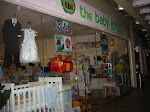
Have you visited The Baby Loft's new boutique yet?
The Baby Loft has added many exclusive items at our parenting resource boutique in Desa Parkcity, have you stopped by to take a look?
- baby cots and mattresses
- strollers from MacLaran and other dependable name brands
- chic maternity wear by Runway Maternity (c)
- extended collection of nursing wear and kiddie clothing
We will also be starting classes soon at the studio, including prenatal yoga, birth confidence, baby signing, baby massage, hypnobirthing...keep yourself posted for announcements at the main TBL website. Email us and tell us your ideas for workshops that you would like to attend!
The next 3D Baby Hands & Feet Sculpturing session is on Mar 23, 2008, sign up now.
FF21, The Waterfront @ Parkcity, 5 Persiaran Residen, Desa Parkcity 52200 Kuala Lumpur (I need a map!!)
Come to check us out, and try on the products that you see online!
- baby cots and mattresses
- strollers from MacLaran and other dependable name brands
- chic maternity wear by Runway Maternity (c)
- extended collection of nursing wear and kiddie clothing
We will also be starting classes soon at the studio, including prenatal yoga, birth confidence, baby signing, baby massage, hypnobirthing...keep yourself posted for announcements at the main TBL website. Email us and tell us your ideas for workshops that you would like to attend!
The next 3D Baby Hands & Feet Sculpturing session is on Mar 23, 2008, sign up now.
FF21, The Waterfront @ Parkcity, 5 Persiaran Residen, Desa Parkcity 52200 Kuala Lumpur (I need a map!!)
Come to check us out, and try on the products that you see online!
Tuesday, March 11, 2008
Angelina Jolie and Brad Pitt take their kids out in slings
Brad Pitt and Angelina Jolie have 4 kids, and twins on the way! I'm guessing they need every parenting trick they can find! Here they use the pouch style slings, which are easy to set up, no buckles to fumble with.


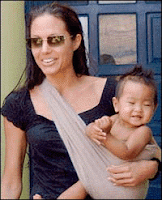
Get your own pouch sling from The Baby Loft - LOFTPouch


Get your own pouch sling from The Baby Loft - LOFTPouch
Monday, March 10, 2008
Funny...
TEACHER: Glen, why do you always get so dirty?
GLEN: Well, I'm a lot closer to the
ground than you are.
GLEN: Well, I'm a lot closer to the
ground than you are.
Saturday, March 8, 2008
Honey seems to calm children's coughs in 1-night study
By CARLA K. JOHNSON
CHICAGO (AP) -- A teaspoon of honey before bed seems to calm children's coughs and help them sleep better, according to a new study that relied on parents' reports of their children's symptoms.
The folk remedy did better than cough medicine or no treatment in a three-way comparison. Honey may work by coating and soothing an irritated throat, the study authors said.
"Many families are going to relate to these findings and say that grandma was right," said lead author Dr. Ian Paul of Pennsylvania State University's College of Medicine.
The research appears in December's Archives of Pediatrics and Adolescent Medicine
U.S. health advisers have recently warned that over-the-counter cough and cold medicines should not be used in children younger than 6, and manufacturers are taking some products for babies off the market.
Three pediatricians who read the study said they would tell parents seeking alternative remedies to try honey. They noted that honey should not be given to children under age 1 because of a rare but serious risk of botulism.
For the research, researchers recruited 105 children with upper respiratory infections from a clinic in Pennsylvania. Parents were given a paper bag with a dosing device inside. Some were empty. Some contained an age-appropriate dose of honey-flavored cough medicine containing dextromethorphan. And some contained a similar dose of honey.
The parents were asked about their children's sleep and cough symptoms, once before the bedtime treatment and once after. They rated the symptoms on a seven-point scale.
All of the children got better, but honey consistently scored best in parents' rating of their children's cough symptoms.
"Give them a little time and they'll get better," said Pat Jackson Allen, a professor at Yale University School of Nursing.
The study was funded by a grant from the National Honey Board, an industry-funded agency of the U.S. Department of Agriculture. The agency had no influence over the study design, data or results, Paul said.
CHICAGO (AP) -- A teaspoon of honey before bed seems to calm children's coughs and help them sleep better, according to a new study that relied on parents' reports of their children's symptoms.
The folk remedy did better than cough medicine or no treatment in a three-way comparison. Honey may work by coating and soothing an irritated throat, the study authors said.
"Many families are going to relate to these findings and say that grandma was right," said lead author Dr. Ian Paul of Pennsylvania State University's College of Medicine.
The research appears in December's Archives of Pediatrics and Adolescent Medicine
U.S. health advisers have recently warned that over-the-counter cough and cold medicines should not be used in children younger than 6, and manufacturers are taking some products for babies off the market.
Three pediatricians who read the study said they would tell parents seeking alternative remedies to try honey. They noted that honey should not be given to children under age 1 because of a rare but serious risk of botulism.
For the research, researchers recruited 105 children with upper respiratory infections from a clinic in Pennsylvania. Parents were given a paper bag with a dosing device inside. Some were empty. Some contained an age-appropriate dose of honey-flavored cough medicine containing dextromethorphan. And some contained a similar dose of honey.
The parents were asked about their children's sleep and cough symptoms, once before the bedtime treatment and once after. They rated the symptoms on a seven-point scale.
All of the children got better, but honey consistently scored best in parents' rating of their children's cough symptoms.
"Give them a little time and they'll get better," said Pat Jackson Allen, a professor at Yale University School of Nursing.
The study was funded by a grant from the National Honey Board, an industry-funded agency of the U.S. Department of Agriculture. The agency had no influence over the study design, data or results, Paul said.
Monday, March 3, 2008
Study sees rise in imaging exams for pregnant women
CHICAGO, Nov 27 (Reuters) - Pregnant women are receiving more high-tech imaging exams, exposing their babies to higher doses of radiation than a decade ago, a study said on Tuesday.
While the levels of radiation exposure are low, they carry a slight risk of harm to the developing fetus, said study author Elizabeth Lazarus, a professor of diagnostic imaging at the Warren Alpert School of Medicine at Brown University in Providence, Rhode Island.
A review of 5,235 imaging examinations performed on pregnant women at Brown from 1997 to 2006 found the number of those exams rose 121 percent. The exams included computed tomography (CT), nuclear medicine and plain film X-rays.
An abdominal ultrasound, a routine exam performed during pregnancy, does not expose the patient to ionizing radiation, which can cause cell damage.
CT exams, which deliver more radiation than other procedures, saw the the greatest increase in use, rising by about 25 percent a year. Use of X-rays increased 7 percent a year, and nuclear medical exams rose by 12 percent annually.
CT scans are used in pregnancy only to detect potentially life-threatening conditions such as bleeding in the brain, blood clots in the lungs or appendicitis.
Researchers estimated the average fetal radiation exposure for CT was 0.69 rads, compared to 0.04 rads for nuclear tests and 0.0015 rads for X-rays. The data were released at a meeting of the Radiological Society of North America in Chicago.
"A patient being recommended for a test like this should talk to their doctor to find out if there are any alternative tests or if there is any harm waiting," Lazarus said in an interview.
"But if one of these tests is needed, we would not discourage any patients from undergoing one, because making a diagnosis could also be life-saving."
(Reporting by Susan Kelly, editing by Philip Barbara)
While the levels of radiation exposure are low, they carry a slight risk of harm to the developing fetus, said study author Elizabeth Lazarus, a professor of diagnostic imaging at the Warren Alpert School of Medicine at Brown University in Providence, Rhode Island.
A review of 5,235 imaging examinations performed on pregnant women at Brown from 1997 to 2006 found the number of those exams rose 121 percent. The exams included computed tomography (CT), nuclear medicine and plain film X-rays.
An abdominal ultrasound, a routine exam performed during pregnancy, does not expose the patient to ionizing radiation, which can cause cell damage.
CT exams, which deliver more radiation than other procedures, saw the the greatest increase in use, rising by about 25 percent a year. Use of X-rays increased 7 percent a year, and nuclear medical exams rose by 12 percent annually.
CT scans are used in pregnancy only to detect potentially life-threatening conditions such as bleeding in the brain, blood clots in the lungs or appendicitis.
Researchers estimated the average fetal radiation exposure for CT was 0.69 rads, compared to 0.04 rads for nuclear tests and 0.0015 rads for X-rays. The data were released at a meeting of the Radiological Society of North America in Chicago.
"A patient being recommended for a test like this should talk to their doctor to find out if there are any alternative tests or if there is any harm waiting," Lazarus said in an interview.
"But if one of these tests is needed, we would not discourage any patients from undergoing one, because making a diagnosis could also be life-saving."
(Reporting by Susan Kelly, editing by Philip Barbara)
Subscribe to:
Posts (Atom)